
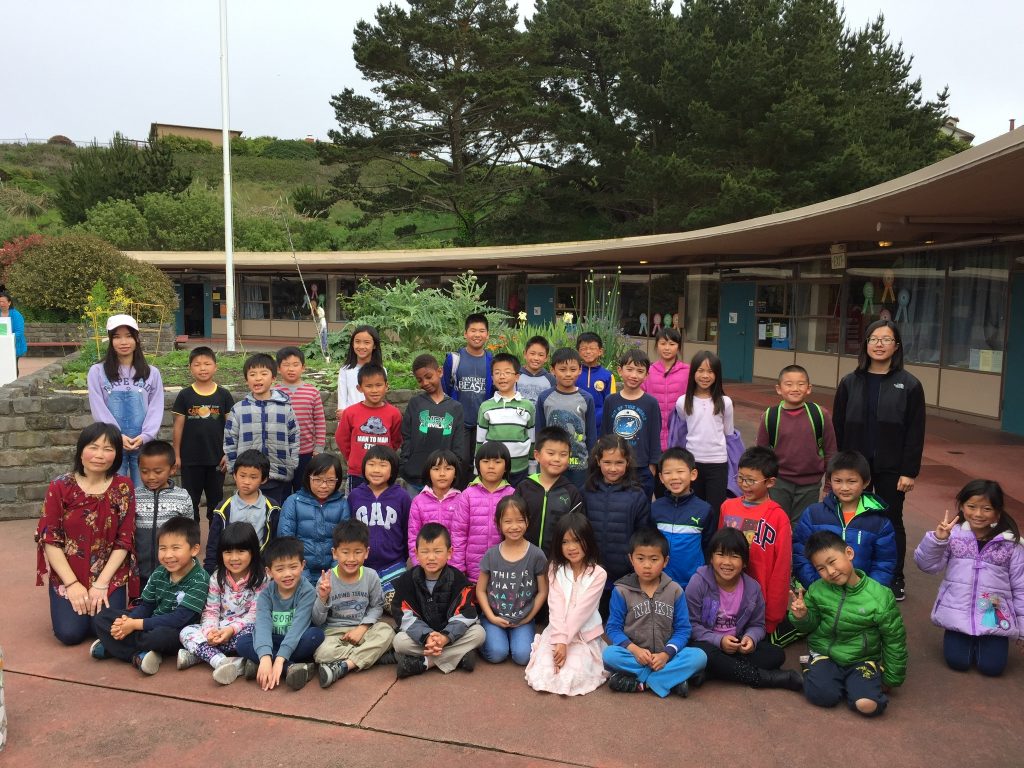
The short answer: San Francisco families have more ways to learn Mandarin than almost any U.S. city: public dual-language immersion schools, weekend Chinese schools, after-school programs on school campuses, private tutors, real-world weekend classes and summer camps. The right choice depends on how many hours of Mandarin your child can realistically get each week, whether you speak Mandarin at home, and your schedule.
This guide walks through each option, who it fits best, and the questions to ask before you enroll.
1. SFUSD Mandarin dual-language immersion
In immersion programs, children learn school subjects in both Mandarin and English. It is the most intensive option and is free, but seats are limited and assigned through SFUSD enrollment.
- Elementary: SFUSD lists Mandarin dual-language immersion at Starr King and Jose Ortega Elementary.
- Middle school: the 6–8 Mandarin pathway continues at Aptos Middle School.
- New in 2027: SFUSD plans to open its first standalone Mandarin immersion school in fall 2027, starting with TK and kindergarten at the Mission Education Center before moving to a permanent site (SF Standard).
Best for: families who want Mandarin to be part of the school day from kindergarten on. Note that several other well-known SFUSD Chinese immersion programs teach Cantonese, not Mandarin, so check the language before you apply.
2. After-school Mandarin at your child’s school
Many SF and Daly City elementary schools host Mandarin classes after the bell, often in partnership with the school’s after-school provider. Because the class comes to your child, there is no extra drive, and children can attend several days a week.
Best for: working families who want steady, frequent practice without changing schools. Everyday Mandarin runs after-school Mandarin at six SF and Daly City school sites, with students grouped by Mandarin level.
3. Weekend Chinese schools
Traditional weekend schools usually meet once a week for a few hours, with a strong focus on reading and writing characters. They are a good fit for heritage families who speak Chinese at home, but once a week is rarely enough on its own for a non-speaking family to build conversation skills.
4. Real-world weekend classes
A newer option takes kids out of the classroom to use Mandarin in real places: ordering food in Chinatown, reading museum signs, asking for directions. Learning words in the setting where they are used helps them stick and builds speaking confidence. See Mandarin Go! weekend classes.
5. Private lessons
One-on-one lessons move at your child’s pace and are ideal for catching up, getting ahead, or preparing for a test like the YCT. They work well as an add-on to any other option. Learn about private Mandarin lessons.
6. Mandarin summer camp
A summer camp keeps Mandarin from fading over the long break and gives beginners a fun, low-pressure start. Look for daily Mandarin instruction, not just cultural crafts. See our Mandarin summer camp.
7. Online classes
Online classes are convenient and widely available, but younger children often find screen-based lessons harder to stay engaged with than in-person classes with peers.
Quick comparison
| Option | How often | Main strength | Keep in mind |
|---|---|---|---|
| SFUSD immersion | Every school day | Most hours of Mandarin; free | Limited seats through district enrollment |
| After-school at your school | 2–5 days a week | Frequent practice, no extra commute | Usually only for students at that school |
| Weekend Chinese school | Once a week | Reading and writing | Limited speaking time |
| Real-world weekend classes | Weekly series | Speaking confidence in real settings | Best alongside another program |
| Private lessons | Flexible | Fully personalized | No peer interaction |
| Summer camp | Daily, for chosen weeks | Prevents summer loss | Seasonal only |
How to choose: 5 questions to ask
- How many hours a week will my child actually speak Mandarin? Frequency matters more than almost anything else.
- Are students grouped by level? Mixing fluent speakers with beginners frustrates both.
- Are the teachers native speakers, and are they trained for American classrooms? Classroom management and encouragement keep kids engaged.
- Does my child enjoy it? Kids who like their Mandarin class keep going for years.
- Does it fit our week? A program at your child’s school or near home is easier to sustain.
Frequently asked questions
What is the best age to start Mandarin?
Earlier is easier, especially for tones and pronunciation, but children can start successfully at any age. Many of our students begin in TK or kindergarten.
Do we need to speak Mandarin at home?
No. Many successful students come from non-Chinese-speaking families. Home support helps, but frequent classes with native-speaking teachers matter most.
Mandarin or Cantonese?
Mandarin is China’s official language and the one most widely taught and tested worldwide. Cantonese is common in San Francisco families with roots in southern China. If grandparents speak Cantonese, some families choose both.
Can my child combine options?
Yes. A common combination is after-school classes during the year, private lessons for extra support, and summer camp to keep skills fresh.
Not sure where to start? Tell us your child’s age and level and a teacher will recommend the best fit.