

The short answer: you can keep your child’s Mandarin growing over winter break with about 20 minutes a day of playful practice, even if you don’t speak Mandarin yourself. Short, daily, hands-on activities work better than one long study session, and the break is a perfect time to try them.
Below are 10 low-prep activities with simple scripts in Chinese characters and pinyin, a 20-minute daily routine, and a one-week plan you can start tomorrow.
Key takeaways
- Little and often wins. 15 to 20 minutes a day does more than one long session on the weekend.
- You don’t need to be fluent. Use a dictionary app with audio, repeat after it together, and let your child be the expert.
- Tie words to real things. Labels, cooking, crafts and games help new words stick because your child sees, touches and says them.
- Use the season. Winter Solstice (冬至 dōngzhì), snow-day crafts and the run-up to Lunar New Year give kids real reasons to use Mandarin.
- Add a teacher for tones. Home practice builds comfort; a native-speaking teacher builds accurate pronunciation and real conversation.
Can I teach my child Mandarin at home if I don’t speak it?
Yes. Your job isn’t to teach grammar. It’s to create short, repeatable moments where your child hears Mandarin, says it out loud and uses it for something real. Three habits make that easy:
- Let audio be the model. Play the word in a dictionary app such as Pleco or Google Translate, then echo it together. If your child is already in a Mandarin class, ask them to teach you.
- Keep it tiny. One to three new words a day is plenty. Repeat yesterday’s words before adding new ones.
- Praise the try, not the tone. Kids who feel successful keep speaking. Save corrections for their teacher.
A simple 20-minute daily routine
- Warm up (3 minutes). Listen to two or three words with audio and echo them together.
- Move and say (5 minutes). Pick one game from the list below.
- Read and find (5 minutes). Match a character card to a label in the house, or find today’s word in a picture book.
- Draw and write (5 to 7 minutes). Trace one character, draw what it means, and say it in a short sentence three times.
If you miss a day, just start again the next day. Consistency matters more than length.
10 easy Mandarin activities for winter break
1. Label the house
Builds: reading, speaking.
Tape character-and-pinyin labels on three objects: 门 (mén, door), 床 (chuáng, bed) and 桌子 (zhuōzi, table). Every time your child touches one, they say the word. Add three new labels every couple of days, then hold a “label hunt” where your child reads each one aloud as they take it down.
2. Tone hands
Builds: listening, pronunciation.
Mandarin has four main tones, and the same syllable changes meaning with each one: 妈 (mā, mom), 麻 (má, hemp), 马 (mǎ, horse) and 骂 (mà, to scold). Draw the tone shape in the air with your hand as you say each one: flat, rising, dip-and-rise, falling. Then swap: your child says a word and you guess the tone.
3. Winter clothes relay
Builds: listening, vocabulary.
Pile up winter gear and call out items in Mandarin: 帽子 (màozi, hat), 手套 (shǒutào, gloves), 围巾 (wéijīn, scarf), 外套 (wàitào, coat). Your child races to put on (or hand you) the right item. Finish with 好冷!(hǎo lěng, so cold!) and a big shiver.
4. Dumpling (or tangyuan) night
Builds: speaking, listening.
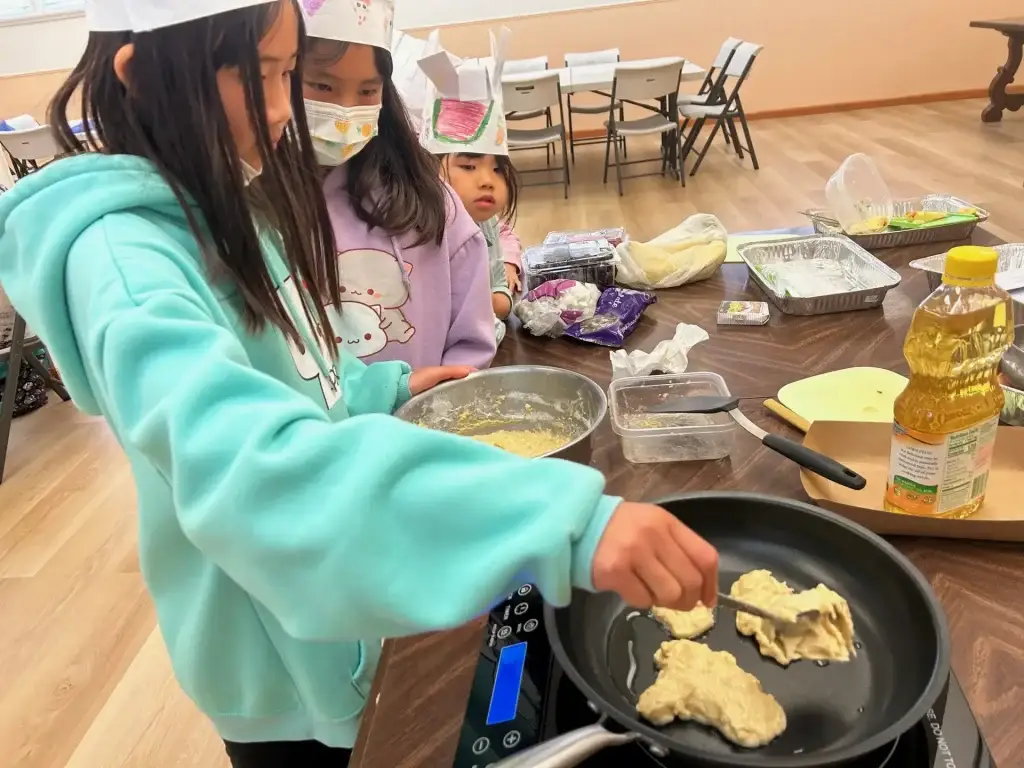
Cooking together is full of action words. Make 饺子 (jiǎozi, dumplings) and narrate each step: 包 (bāo, wrap), 煮 (zhǔ, boil), 尝 (cháng, taste). Finish with 好吃!(hǎochī, delicious!). Around the Winter Solstice on December 21–22, many families make 汤圆 (tāngyuán, sweet rice balls) instead. Roll the dough between your palms and say 搓 (cuō, roll) each time.
5. Family introductions
Builds: speaking, listening.
Make name cards for a holiday meal and have your child introduce everyone: 我叫…… (wǒ jiào…, my name is…) and 这是我妈妈 (zhè shì wǒ māma, this is my mom). Useful words: 爸爸 (bàba, dad), 哥哥 (gēge, older brother), 姐姐 (jiějie, older sister), 弟弟 (dìdi, younger brother), 妹妹 (mèimei, younger sister).
6. Picture characters gallery
Builds: reading, writing.
Some characters started as pictures. Draw the picture first, then the modern character: 山 (shān, mountain), 日 (rì, sun), 月 (yuè, moon), 木 (mù, tree), 人 (rén, person). Hang them on a “gallery wall” and give a tour in Mandarin.
7. Paper snowflakes and colors
Builds: vocabulary, following directions.
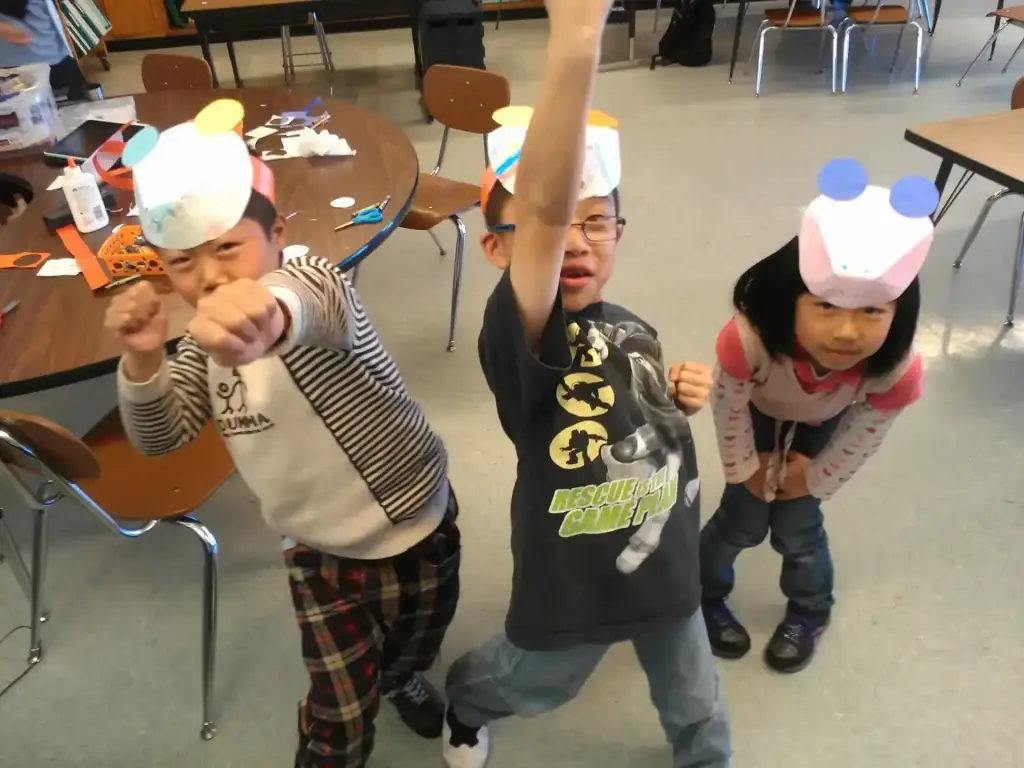
Cut 雪花 (xuěhuā, snowflakes) from colored paper while you name colors: 红色 (hóngsè, red), 蓝色 (lánsè, blue), 黄色 (huángsè, yellow), 绿色 (lǜsè, green). Ask 你要什么颜色?(nǐ yào shénme yánsè?, what color do you want?) before handing over each sheet.
8. Snack shop
Builds: numbers, polite requests.
Set up a snack shop with prices from 一 (yī, one) to 十 (shí, ten). The customer says 我要…… (wǒ yào…, I want…) and asks 多少钱?(duōshao qián?, how much?). The shopkeeper answers with the price, and both say 谢谢 (xièxie, thank you). Then switch roles.
9. Bingo
Builds: listening, reading.
Make a 3×3 grid of numbers, colors or label words. Call them out in Mandarin while your child covers each square. Three in a row wins, and the winner reads the row aloud. Next round, your child is the caller.
10. Good morning, good night
Builds: everyday speaking.
Bookend the day in Mandarin: 早上好 (zǎoshang hǎo, good morning) at breakfast and 晚安 (wǎn’ān, good night) at bedtime. Add 起床了!(qǐchuáng le!, time to get up!) on lazy mornings. Two phrases used every day beat ten phrases used once.
A sample one-week plan
- Monday: label the house and tone hands.
- Tuesday: winter clothes relay and the morning and night greetings.
- Wednesday: picture characters gallery.
- Thursday: snack shop and bingo.
- Friday: family introductions at dinner.
- Weekend: paper snowflakes and a dumpling or tangyuan night.
Looking for more ideas? See our 5 ways to make learning Mandarin fun for kids.
When to add a teacher
Home practice builds comfort and habits. A native-speaking teacher adds what parents can’t easily give: accurate tones, real conversation and a plan for steady progress. Everyday Mandarin offers a few ways to keep going:
- Private lessons, one-on-one with a native-speaking teacher, online or in person in San Francisco and Daly City. They’re booked around your family’s schedule, so they work well over the holidays.
- Mandarin GO! weekend classes for ages 5–12, where small groups learn and use Mandarin at places like Chinatown, the Academy of Sciences and Golden Gate Park. The first session is free for new families.
- After-school programs at six elementary schools in San Francisco and Daly City, for Mandarin every school day.
Frequently asked questions
How can I teach my child Mandarin at home?
Keep it short, daily and playful. Tie new words to real objects, food, movement and crafts, use an app with audio as the pronunciation model, and repeat the same words over several days. Pair home practice with a live teacher for tones and conversation.
How much Mandarin practice should kids do over winter break?
About 15 to 20 minutes a day is enough to keep skills fresh and add new words. Several short sessions work better than one long one.
Can my child keep up Mandarin if we don’t speak it at home?
Yes. Many of our students come from families who don’t speak Mandarin. The key is steady contact with native-speaking teachers plus a few minutes of practice at home, which the activities above make easy.
What’s a good age to start these activities?
Most of these work from preschool through elementary school. Younger children love the movement and cooking activities; older kids enjoy running the snack shop, calling bingo and writing characters. Read more in our guide to the best age to start learning Mandarin.
Next steps
Pick two activities and try them tomorrow. If you’d like a teacher’s help this winter, talk with a teacher. Tell us your child’s age and Mandarin level and we’ll recommend the best fit. Comparing options? Read our guide to Mandarin classes for kids in San Francisco.